
REVIEW · SOVIET LATVIA & MEMORIAL TOURS
Riga Jewish History Tour
Riga remembers in stone and stucco. This private tour connects Art Nouveau Riga street corners to the Holocaust sites that shaped the city, with an English guide and time to ask questions.
I love the way the guide ties Mikhail Eisenstein-designed buildings to philosopher Isaiah Berlin, so the architecture has real people behind it. I also like the pacing, with real pause time at the Great Choral Synagogue Memorial and the Rumbula Forest Memorial.
One possible drawback is that this is a somber route focused on mass violence and loss, including an extended stop in the forest memorial area.
In This Review
- Key highlights worth planning for
- A Riga tour that links Art Nouveau, ghetto streets, and memorial sites
- Price and logistics: what your $96.33 really buys
- Stop 1: Art Nouveau Riga and the Eisenstein connection to Isaiah Berlin
- Stop 2: Latgale suburb and what still looks like WWII-era Riga
- Stop 3: Great Choral Synagogue Memorial, July 4, 1941
- Stop 4: Rumbula Forest Memorial and the November and December 1941 killings
- Stop 5: Riga Ghetto and Latvian Holocaust Museum as the story bridge
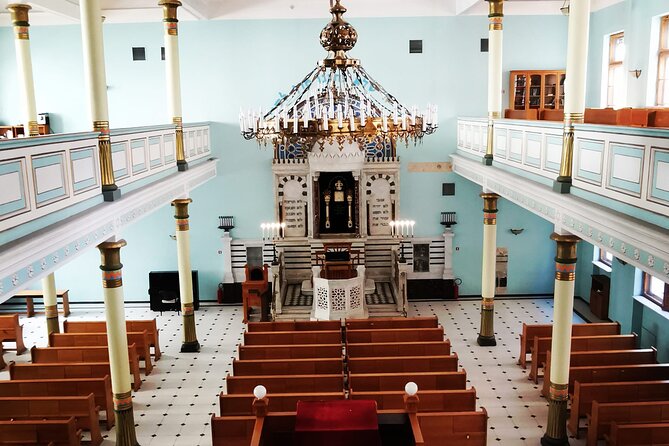
- Stop 6: Riga Synagogue on Peitavas Street, Art Nouveau with Ancient Egyptian motives
- How the guide style changes the whole experience
- Who should book this tour, and who might want to plan a different route
- Should you book the Riga Jewish History Tour?
- FAQ
- How long is the Riga Jewish History Tour?
- Is pickup included, and where do I meet the guide?
- Is this tour private?
- Are admission tickets included, and are donations required?
- Is the tour offered in English?
- Is there a dress code or anything to cover your head?
- Can I cancel for a full refund?
Key highlights worth planning for
- Private guide time so you can ask questions and adjust your attention span on the spot
- Art Nouveau with a purpose, including buildings tied to Jewish architect Mikhail Eisenstein
- Former ghetto streetscape, with Latgale suburb showing what the WWII-era city still hints at
- Major memorials with exact dates, including July 4, 1941 and the November and December 1941 killings
- Holocaust Museum context, built around the Riga Ghetto and Jewish life before the Holocaust
- Riga synagogue on Peitavas Street, an Art Nouveau landmark with Ancient Egyptian motives
Other Soviet-era sites and memorials we have covered
A Riga tour that links Art Nouveau, ghetto streets, and memorial sites
If you like your sightseeing with meaning, this Riga Jewish History Tour fits the bill. You are not just looking at old buildings. You are tracing how Jewish life shaped the city, how the ghetto changed ordinary streets, and how the Holocaust left scars that Riga still marks today.
What makes it especially effective is that the tour moves in a clear sequence. You start with architecture, then shift into the places tied to ghetto life and persecution, and you end with a synagogue that shows how Jewish culture and design blended into Riga’s Art Nouveau identity.
This is also a truly practical format. It is private, it runs about 3 to 4 hours, and you get an English guide who handles the details while you handle the questions. That matters because this subject deserves both accuracy and sensitivity.
Price and logistics: what your $96.33 really buys
At $96.33 per person for a 3 to 4 hour private experience, the value comes from what is included: private transportation and guide services. You are paying for someone to connect the dots across several neighborhoods and memorial sites, without turning it into a rushed checklist.
A few helpful notes affect your day-to-day comfort:
- Most stops list admission tickets as free, but donations are required on site at the Riga synagogue and at the Riga Holocaust Museum (the museum donation is €5.00 per person).
- Pickup is offered, but you must meet outside your hotel or apartment, because the car is not allowed to park in Old Riga.
- Your ticket is mobile, which reduces hassle when you arrive.
- It is booked about 59 days in advance on average, so if you have a tight schedule, do not wait too long to reserve.
If you are traveling with a group, there are also group discount options, which can make this even more attractive versus paying for separate private guides or taxis between sites.
Stop 1: Art Nouveau Riga and the Eisenstein connection to Isaiah Berlin
The tour starts with Art Nouveau Riga, and it is a smart move. Before you reach memorials, you get a sense of what Riga looked like when Jewish professionals were part of the city’s cultural life.
You focus on several beautiful buildings in an area linked to Jewish architect Mikhail Eisenstein. The standout detail here is that one of these buildings is connected to the birth of philosopher Isaiah Berlin. That is a big deal for context. It turns architecture from a pretty background into a clue about identity, education, and influence.
You get about 30 minutes here, and admissions are listed as free. That time is long enough to take photos and still hear the cultural explanation that keeps the details from feeling random.
A practical tip: if you like photos, this is where you will enjoy moving slowly. The architecture is visually rewarding, and the guide’s commentary helps you frame what you are seeing.
Other Latvian history we have walked through
- Cesis: Medieval Heritage and Natural Treasures
★ 4.0 · 4 reviews - Riga’s Architecture: A self-guided audio tour of the city’s art nouveau history
★ 5.0 · 3 reviews - All Inclusive Honest History Tour – Āraiši, Cēsis, Līgatne, Sigulda
★ 5.0 · 3 reviews
Stop 2: Latgale suburb and what still looks like WWII-era Riga
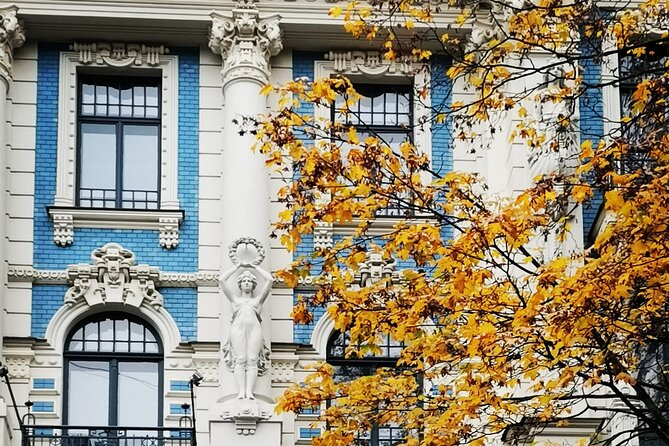
Next comes the Latgale suburb, tied to the former territory of the Riga Jewish Ghetto. This stop has a different feel. Instead of stopping at one single landmark, you are shown a streetscape where many buildings still resemble their 80-years-ago shape from the WWII era.
You get another 30 minutes and free admission. The value here is in how the guide links present-day buildings to historical reality. Even if the city has changed around them, the structures help you understand what confinement and control meant on a daily geographic level.
One gentle caution: because this is more of a neighborhood feel than a single museum room, you might want to use your questions actively. Ask what you are looking at, and ask what changed versus what remained.
Stop 3: Great Choral Synagogue Memorial, July 4, 1941
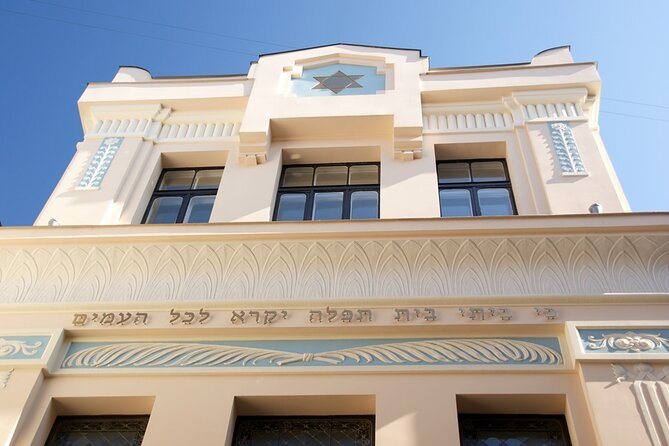
Then the tour turns to one of the most direct historical events in the route: the Great Choral Synagogue Memorial.
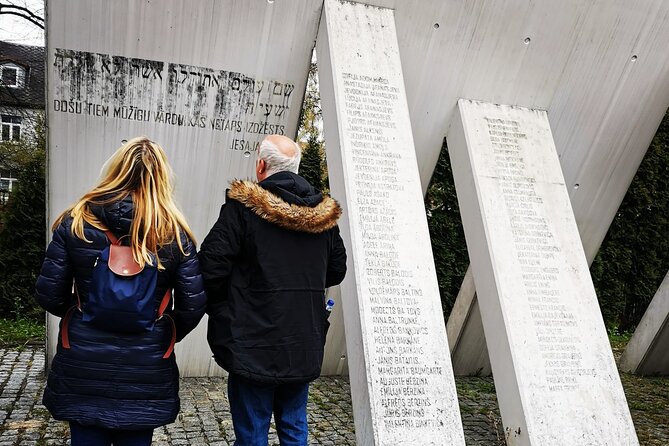
On July 4, 1941, more than 300 Jewish refugees from Lithuania and local Latvian Jews were herded into the synagogue basement. The synagogue was intentionally burned to the ground, and there is now a memorial place marking it.
This stop is short, about 15 minutes, but it can feel long. The reason is simple: the guide’s job is to place the event in a bigger pattern without losing the human scale. You also get time to pause and take in the memorial site without rushing.
If you are sensitive to heavy topics, this is a good moment to slow your pace inside your own head. The route is somber all the way through, but stopping here sets the emotional tone for what follows.
Stop 4: Rumbula Forest Memorial and the November and December 1941 killings
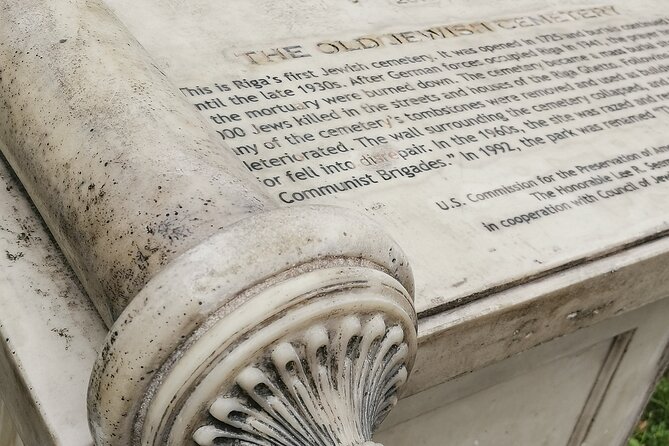
Next is Rumbula Forest Memorial, and this is the longest outside stop, about 1 hour.
Here the story becomes brutally specific. In November 1941, the Nazi decision was to completely exterminate Jewish prisoners of the Riga ghetto. During the events on November 30 and December 8, 1941, more than 25,000 people were killed, including approximately 1,000 Jews deported from Germany. The complete memorial opened on November 29, 2002.
This is not a quick photo stop. You go for context, dates, and the sense of place. The guide’s explanations help you understand how a forest area became a site of mass murder, and why the memorial matters today.
You should also consider the emotional weight here. Expect a slower, more reflective hour. In the feedback I saw from past guests, the guides were praised for presenting this kind of material tactfully and with honor, which matters a lot when you are standing at a memorial tied to large-scale atrocity.
Stop 5: Riga Ghetto and Latvian Holocaust Museum as the story bridge
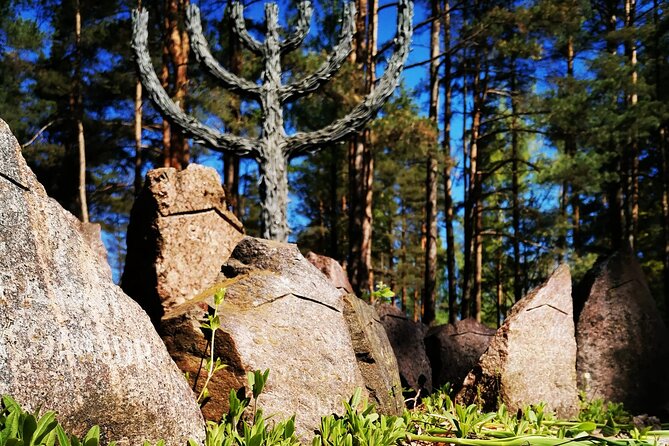
After the outdoor memorials, the tour shifts indoors to Riga Ghetto and Latvian Holocaust Museum. This is your chance to zoom out and connect the pieces into a coherent story.
You spend about 30 minutes, and the museum is described as a window into:
- the story of the Riga Ghetto
- the Holocaust in Latvia
- Jewish life in Latvia before the Holocaust
That third bullet is key. Many memorial experiences focus almost entirely on death and destruction. Here, Jewish life before the Holocaust is part of the learning arc. It helps you understand that what was destroyed was not abstract. It was communities, culture, and daily existence.
Donation is required at the museum, listed as €5.00 per person. It is worth treating the donation as part of your respect for the work of preserving these histories, not as an optional extra.
Also note: your time in the museum is limited. If you read slowly or want deeper detail, use your guide question-time wisely before you head in. Ask what themes you should look for based on your interests.
Stop 6: Riga Synagogue on Peitavas Street, Art Nouveau with Ancient Egyptian motives
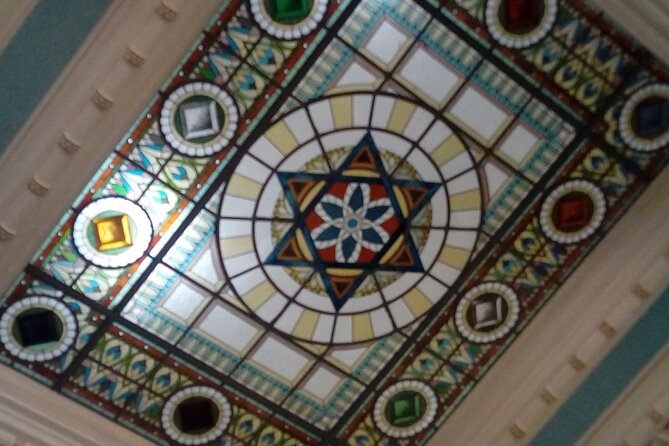
The final stop is the Riga Synagogue on Peitavas Street, an Art Nouveau landmark built 1903 to 1905 and designed in that style with Ancient Egyptian motives.
This pairing of Jewish religious space and Art Nouveau design is one of the reasons this tour feels more than just memorial-focused. It highlights how Riga’s Jewish community shaped the city’s visual culture too.
You get about 45 minutes here, and admissions are listed as free. There is one practical item to plan for: a donation for the synagogue is required on site. Because it is required, bring cash or plan to follow the payment method available at the time you visit.
This stop can also serve as a kind of emotional counterweight. After the earlier memorial stops, you end on a place of cultural identity and architectural beauty, grounded in what the community built.
How the guide style changes the whole experience
A tour like this lives or dies on the guide. Here, the pattern in feedback is consistent: the guide is flexible, answers questions directly, and keeps the tone respectful.
One guide named Armands is repeatedly mentioned, including praise for answering questions and sometimes going over the planned time because guests wanted a bit more space at sites. That is a big deal on a tour like this, where the right pace helps you absorb the facts and the emotions without being swept along.
There is also a practical kind of flexibility that matters. For example, on a Saturday, some things may be closed due to Shabbat, and the guide handled that by bringing people to another place of interest. That is exactly the kind of adaptation you want when your visit lands on a day with different access rules.
If you have specific questions, bring them. Ask about architecture, ghetto geography, or particular events and dates. You are in a private setup, so your curiosity should be welcomed rather than cut off.
Who should book this tour, and who might want to plan a different route
This tour is a strong match if you want:
- a private guide and time to ask questions
- a route that combines architecture with major Holocaust memorial sites
- learning that includes Jewish life before the Holocaust, not only the aftermath
It is also a good fit if you like structured tours that still allow slow moments, since several stops are intentionally given enough time for photos, reading, and reflection.
The main mismatch is emotional readiness. If mass violence memorials are difficult for you, you might still appreciate the careful guide and clear pacing, but you should go into it knowing this is not a light day.
Also, if you are visiting on a day when closures might apply, you may not see every possible interior space. The guide can often adjust, but your flexibility helps.
Should you book the Riga Jewish History Tour?
I think this is one of those Riga tours that earns its place. For the money, you get a private guide, transport between multiple key sites, and enough time at each stop to actually absorb what you are seeing.
Book it if you want Riga viewed through a Jewish lens that includes:
- Art Nouveau and notable people tied to the city
- the ghetto’s physical presence in today’s streets
- memorials that name dates and scale of tragedy
- a museum that frames Jewish life before the Holocaust
Skip it or consider another option if you are looking for a purely celebratory architecture walk, because the middle of the itinerary will be heavy. But if you can handle solemn content with respect, this route offers clarity, structure, and context that most solo wandering cannot provide.
FAQ
How long is the Riga Jewish History Tour?
It runs about 3 to 4 hours.
Is pickup included, and where do I meet the guide?
Pickup is offered. You should wait outside of your hotel or apartment, because the car is not allowed to park in Old Riga.
Is this tour private?
Yes. It is a private tour/activity, so only your group participates.
Are admission tickets included, and are donations required?
Most stops list admission tickets as free, but donations are required on site. A donation is required at the Riga synagogue, and there is a required €5.00 per person donation to the Riga Holocaust Museum.
Is the tour offered in English?
Yes, the tour is offered in English.
Is there a dress code or anything to cover your head?
Dress code is any (as long as you are not naked). If your head is not covered by a cap, hat, scarf, or other, a kipa will be provided.
Can I cancel for a full refund?
Yes. You can cancel up to 24 hours in advance for a full refund.
Other Latvian Tours
- Riga Old Town walking tour★ 4.5 · 304 reviews
- Latvian food tasting tour at Riga Central market★ 4.5 · 241 reviews
- Discover Riga Bike Tour★ 5.0 · 166 reviews
- Best of Riga Walking Tour – Highlights and Hidden Gems★ 5.0 · 147 reviews
- Riga Old Town Walking Tour in a Small Group★ 4.5 · 132 reviews
More Latvia Reviews
- Riga Old Town walking tour★ 4.5 · 304 reviews
- Latvian food tasting tour at Riga Central market★ 4.5 · 241 reviews
- 2 countries! Hill of Crosses, Rundale Palace and Bauska castle★ 5.0 · 225 reviews
- Discover Riga Bike Tour★ 5.0 · 166 reviews
- From Riga: Hill of Crosses & Jelgava Highlights★ 5.0 · 149 reviews
The Soviet Years, Elsewhere in Latvia
- Visit of Salaspils Memorial Ensemble★ 5.0 · 10 reviews
- Private Day Tour to Sigulda, Turaida Castle and Soviet Bunker★ 4.5 · 8 reviews
- Private Soviet Riga tour★ 5.0 · 8 reviews
- Full-Day Private Trip to Nuclear Missile Base and Secret Soviet Bunker★ 4.5 · 7 reviews
Other Latvian tours we have written up


Soviet Latvia & Memorial Tours, side by side.
 ★ 5.0Visit of Salaspils Memorial EnsembleFrom $7210 reviews
 ★ 5.0Private Soviet Riga tourFrom $1808 reviews
 ★ 4.5Private Day Tour to Sigulda, Turaida Castle and Soviet BunkerFrom $1748 reviews
 ★ 4.5Full-Day Private Trip to Nuclear Missile Base and Secret Soviet BunkerFrom $4557 reviews
Also on these lists