
REVIEW · SOVIET LATVIA & MEMORIAL TOURS
Private Soviet Riga tour
Soviet Riga feels different up close. I love the private, question-friendly format, and I also like that guide Edvards keeps the explanations clear and human, not just dates on a wall. You’ll also get the kind of city details most people skip, from Riga’s power buildings to the streets that once carried Lenin’s name, including the KGB Building. The only real drawback is that the topic is heavy, with deportations and secret-police methods, so it is not a light, casual stroll.
This is a roughly 2-hour, on-foot tour with a tidy set of 10 stops, starting at Latviešu strēlnieku laukums and ending at Dailes Theatre. You move at a steady pace, each stop is timed, and you can ask questions as you go, which makes the whole story stick.
In This Review
- Key things that make this Soviet Riga tour work
- Soviet Riga, told street by street
- Price and logistics: what you get for $180.62 per group
- Stop 1, Latviešu strēlnieku laukums: Stalin to Gorbachev in one square
- Stop 2, Museum of the Occupation of Latvia: deportations and their scale
- Stop 3, 1991 Barikazu Laukums: the barricades as a turning point
- Stop 4, Baltic Way Footprint Monument and Freedom Monument
- Stop 5, Nativity of Christ Cathedral: religion under Soviet pressure
- Stop 6, Radisson Blu Latvija Conference & Spa Hotel: Hotel Latvia, Western access, and bugging
- Stop 7, Brivibas Iela: Lenin street, housing patterns, and Rigas Modes
- Stop 8, KGB Building: power, fear, and a skyline view
- Stop 9, Dailes Theatre: Soviet architecture and the collapse of the USSR
- The guide factor: why Edvards’ style is a big deal
- Who this tour is for, and who should skip it
- Should you book this private Soviet Riga tour?
- FAQ
- How long is the Private Soviet Riga tour?
- Where does the tour start and end?
- What is the group size for this private tour?
- Is the tour offered in English?
- Are tickets and admission included?
- What is included in the tour price?
- What is not included?
- Do I need to bring anything for entry?
- Is there free cancellation?
Key things that make this Soviet Riga tour work
- Private pacing with real Q and A so you can steer the conversation toward what interests you most
- Edvards’ personal storytelling style that connects Soviet-era events to lived experience
- A focused route through turning points, from Stalin to Gorbachev, to 1991 independence and beyond
- Monuments plus institutions, so you see symbols and also where the system operated
- Big-city atmosphere in short segments, you get quick context at each stop instead of one long lecture
Other Soviet-era sites and memorials we have covered
Soviet Riga, told street by street
What I like about this tour is that it treats Riga as a living textbook. You start with a place that frames the Soviet era, then you move to sites tied to occupation, resistance, and the everyday structures of control. Instead of just pointing at buildings, the guide explains what they meant then, and why they still matter now.
This format is especially good if you want more than a checklist. You get a walking storyline: Soviet power, fear and persecution, organized resistance, and then the collapse. And because the tour is private, you can pause and ask for clarification when a topic gets uncomfortable, like Siberian deportations or how the KGB operated.
Price and logistics: what you get for $180.62 per group
The price is listed as $180.62 per group, up to 15 people, for about 2 hours. That structure matters because you are not paying per person for a standard bus tour, you are paying for a guided route designed around your group. In plain terms, it can be good value if you are traveling with friends or family who want the same pace and focus.
Two practical notes to keep in mind. First, there is no hotel pickup or drop-off, so you’ll want to reach the start point near Centra rajons on your own. Second, the tour finishes at Dailes Theatre, and it is about a 15-minute walk to old town, so plan your next stop with that in mind.
You also get a mobile ticket, which makes check-in easier on a phone while you’re on the move.
Stop 1, Latviešu strēlnieku laukums: Stalin to Gorbachev in one square
The tour opens at Latviešu strēlnieku laukums, and the guide uses it to set the Soviet timeline. You get a quick overview of the Soviet period, broken into eras from Stalin to Gorbachev, so the rest of the route has clear context.
This stop also centers on the Latvian red riflemen and the significance of their monument. The point is not to memorize names, it’s to understand why certain figures were elevated and how Soviet cultural heritage was used to shape what people believed. If you’re the type who wants a framework before the details, this is a smart first step.
A small caution: this “start in the middle” approach can feel political fast. If you prefer a slow warm-up, you may want to mentally brace yourself, because the tour moves quickly from symbolism into systems.
Prefer a private guide? Others we rated
- Private Riga Old Town Walking Tour
★ 5.0 · 62 reviews - Private Full-Day Trip to Turaida, Sigulda, and Cesis
★ 4.5 · 52 reviews - Private trip – Hill of Crosses / 2 countries in 1 day
★ 5.0 · 44 reviews - Full-Day Private Trip to Cesis, Sigulda and Turaida from Riga
★ 4.5 · 42 reviews - Private Full-Day Trip to Hill of Crosses, Rundale Palace & Bauska
★ 5.0 · 36 reviews
Stop 2, Museum of the Occupation of Latvia: deportations and their scale
Next is the Museum of the Occupation of Latvia, focused here on deportations to Siberia. In around 10 minutes, you’ll cover the reasons for the deportations, the scale, and the impact on Latvia.
Even in a short stop, the value is in the framing. A guide can connect the dots for you, so you understand that deportations were not random tragedy. They were part of how control worked, and they shaped families, demographics, and long-term trauma.
One thing to consider: this topic can be emotionally tough. If your group includes kids, the tour notes that children must be accompanied by an adult. You might also want to check that everyone is ready for stories about forced removal and state violence.
Stop 3, 1991 Barikazu Laukums: the barricades as a turning point
At 1991 Barikazu Laukums, you shift from oppression to organized resistance. This stop is presented as the climax of the fight for Latvia’s independence, with the era of the barricades as the core theme.
The explanation you’ll get here is practical in the best way. It’s not just a heroic narrative, it includes logistics and mood during the time period, plus the impact. That matters because independence did not happen in a vacuum, it was made through effort, coordination, and public determination.
If you’re trying to understand the “how,” this stop is a good hinge between Soviet control and the momentum toward freedom.
Stop 4, Baltic Way Footprint Monument and Freedom Monument
After the barricades, the route looks at the Baltic Way via the Baltic Way Footprint Monument. The tour frames it as the largest non violent anti Soviet demonstration in the Baltics, and it breaks down how it worked in real life: the logistics, the mood, and the impact.
Then you move to the Freedom Monument, Riga’s most iconic monument. The guide explains why it mattered and how it survived the Soviet period, which is an important theme when you’re thinking about culture and memory under occupation.
What I like here is that the tour balances two kinds of resistance. You see non violent protest side by side with the urgency of 1991 barricades. Together, they show that pressure against the Soviet system came in more than one form.
Stop 5, Nativity of Christ Cathedral: religion under Soviet pressure
The Nativity of Christ Cathedral brings religion into the conversation. You’ll discuss the role of religion in Soviet-era life and how religion was treated under Soviet rule.
This stop helps you understand something people often miss: control was not only about police power and borders. It also touched beliefs, institutions, and public life. A cathedral can feel like pure architecture at first glance, but with the guide’s context it becomes a window into social policy.
If your group likes human-scale history, this is a good change of pace between memorial and security related stops.
Stop 6, Radisson Blu Latvija Conference & Spa Hotel: Hotel Latvia, Western access, and bugging
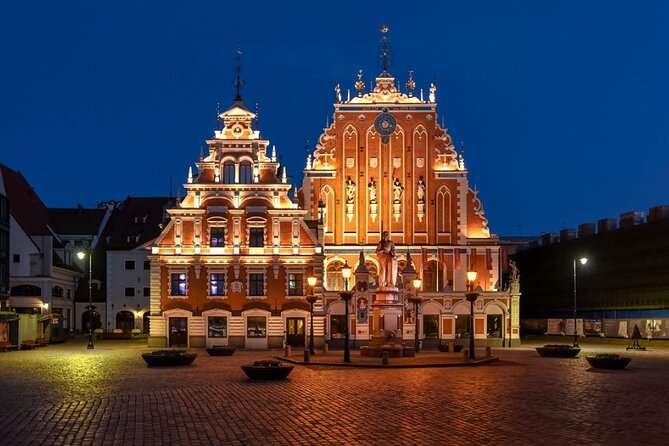
Now you head to Radisson Blu Latvija Conference & Spa Hotel, formerly Hotel Latvia. This stop is about the tension between the outside world and Soviet secrecy.
The tour explains that this was the only hotel where Western tourists were allowed to stay in Soviet Riga. It also covers how the rooms were famously bugged by the KGB. That combination, controlled access plus surveillance, is a chilling reminder that the system watched even when it allowed visitors in.
You might find this stop particularly memorable because it is about daily life, not just big political events. A hotel sounds ordinary until you see what ordinary meant when the secret police had a hand in everything.
Stop 7, Brivibas Iela: Lenin street, housing patterns, and Rigas Modes
Brivibas Iela is next, Freedom Street, and the guide also points out that it used to be Lenin Street. You’ll get examples of Soviet era residential architecture, which is one of the best ways to learn how a regime shaped everyday living.
This stop also includes Rigas Modes, described here as the city’s most famous fashion house. That detail matters because it suggests how Soviet Riga was not only gray blocks and uniforms, there were also cultural brands and consumer life, even inside a restricted system.
A nice benefit of this segment is that it feels more like a real walk in the city than a museum tour. It’s easier to absorb when you can actually picture people living there.
Stop 8, KGB Building: power, fear, and a skyline view
The KGB Building is one of the most dramatic stops on the route. The tour presents it as the HQ of the Russian secret police in Latvia, and it notes it is the highest building in Riga. From the top, you can see as far as Siberia, which gives a symbolic scale to what the Soviet state could reach.
The guide also covers KGB recruitment methods and interrogation methods. This is where the tour becomes clearly about how the system operated, not just what it claimed to represent.
A practical consideration: you’re dealing with a topic that can be intense. If you have sensitive group members, agree in advance on whether to take breaks or steer into lighter questions. The private format helps, because you can keep control of the pace.
Stop 9, Dailes Theatre: Soviet architecture and the collapse of the USSR
Your final stop is Dailes Theatre. The tour describes it as an iconic example of Soviet era architecture, and then it brings the story to the collapse of the Soviet Union.
This ending matters because it ties together what you have been seeing all along. Architecture is not just about style, it’s about how power wants to look and how states try to project stability. When the Soviet system fell, the physical environment stayed, and the guide helps you see that contrast.
If you want a satisfying close, this is a strong final note. You finish with a recognizable landmark, then you’re set up to keep exploring on your own, since the tour ends near old town.
The guide factor: why Edvards’ style is a big deal
A standout theme from the experience is Edvards’ approach. He is described as passionate about the topic, with immense knowledge that he can explain in an easy way. That combination matters more than it sounds.
With Soviet history, it is easy for tours to get stuck in either heavy facts without clarity or vague stories without specifics. Here, the guide’s job is to translate a complicated system into something you can follow, then connect it to what you can see outside your eyes.
Another plus is the personal angle. You’ll get a sense that Edvards connects the history to lived experience, including his own family’s context. That kind of personal framing can make the whole route feel less like a lecture and more like you’re hearing how events shaped real people.
Who this tour is for, and who should skip it
This tour is a great fit if you want Soviet Riga history through real places, not just general talk. It’s also ideal if you like structured walking routes, where each stop has a job, context, and a takeaway question.
It may not be the best choice if your goal is only casual sightseeing. The route includes deportations and KGB interrogation, and even with a good guide, the material is heavy. If your group wants light entertainment or mostly architecture with minimal political context, you might feel the tone is too serious.
If you have kids, remember the tour requires an adult accompaniment. You might still be able to handle it, but I’d treat it as something to discuss beforehand so expectations match.
Should you book this private Soviet Riga tour?
Book it if you want a guided walk that explains the Soviet era in a way that sticks, with a guide like Edvards who can handle big topics clearly. The private format is a real advantage, especially for asking follow-up questions at monuments that raise tough themes.
Skip it or choose a different style if you want a light, low-stakes city tour. This one leans directly into occupation, surveillance, resistance, and the machinery of fear. If that is what you came for, you’re in the right place.
FAQ
How long is the Private Soviet Riga tour?
It runs for about 2 hours.
Where does the tour start and end?
It starts at Latviešu strēlnieku laukums in Centra rajons and ends at Dailes Theatre on Brīvības iela 75. The finish is approximately a 15-minute walk to old town.
What is the group size for this private tour?
It is private, and your group will be the only group participating. The price is listed per group up to 15.
Is the tour offered in English?
Yes, it is offered in English.
Are tickets and admission included?
Admission tickets are listed as free for the stops shown. The tour also includes local taxes.
What is included in the tour price?
A professional guide, local taxes, and a private tour are included.
What is not included?
Hotel pick-up and drop-off are not included.
Do I need to bring anything for entry?
The tour uses a mobile ticket.
Is there free cancellation?
The experience allows free cancellation, with a full refund if you cancel at least 24 hours in advance of the start time.
Other Latvian Tours
- Riga Old Town walking tour★ 4.5 · 304 reviews
- Latvian food tasting tour at Riga Central market★ 4.5 · 241 reviews
- Discover Riga Bike Tour★ 5.0 · 166 reviews
- Best of Riga Walking Tour – Highlights and Hidden Gems★ 5.0 · 147 reviews
- Riga Old Town Walking Tour in a Small Group★ 4.5 · 132 reviews
More Latvia Reviews
- Riga Old Town walking tour★ 4.5 · 304 reviews
- Latvian food tasting tour at Riga Central market★ 4.5 · 241 reviews
- 2 countries! Hill of Crosses, Rundale Palace and Bauska castle★ 5.0 · 225 reviews
- Discover Riga Bike Tour★ 5.0 · 166 reviews
- From Riga: Hill of Crosses & Jelgava Highlights★ 5.0 · 149 reviews
The Soviet Years, Elsewhere in Latvia
- Visit of Salaspils Memorial Ensemble★ 5.0 · 10 reviews
- Riga Jewish History Tour★ 5.0 · 9 reviews
- Private Day Tour to Sigulda, Turaida Castle and Soviet Bunker★ 4.5 · 8 reviews
- Full-Day Private Trip to Nuclear Missile Base and Secret Soviet Bunker★ 4.5 · 7 reviews
Other Latvian tours we have written up


Soviet Latvia & Memorial Tours, side by side.
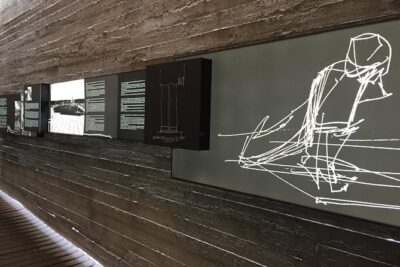 ★ 5.0Visit of Salaspils Memorial EnsembleFrom $7210 reviews
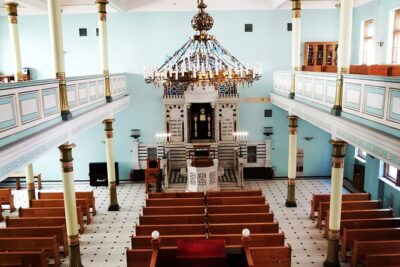 ★ 5.0Riga Jewish History TourFrom $969 reviews
 ★ 4.5Private Day Tour to Sigulda, Turaida Castle and Soviet BunkerFrom $1748 reviews
 ★ 4.5Full-Day Private Trip to Nuclear Missile Base and Secret Soviet BunkerFrom $4557 reviews
Also on these lists