

REVIEW · RIGA ART NOUVEAU ARCHITECTURE TOURS
Riga’s Architecture: A self-guided audio tour of the city’s art nouveau history
Riga’s facades talk, if you listen. This self-guided audio walk turns Riga Art Nouveau from a vague style label into a trail you can follow, with guided context about why the city has more than 800 Art Nouveau buildings and the world’s highest concentration. It’s a compact route, but the story behind it is big.
I love that it teaches you how to identify Art Nouveau in real time. I also like the way the audio explains the architects, including Mikhail Eisenstein and the fact that his son Sergei became a legendary Soviet filmmaker, so the street scenes feel connected to people and history.
One thing to watch: you need your own phone and headphones. The tour includes offline audio, but it does not include the device audio output, so plan for comfort and battery.
In This Review
- Key highlights you will feel right away
- Riga Art Nouveau on a timer: what you are really buying
- VoiceMap logistics: how to make it smooth
- Starting at Jaņa Rozentāla laukums: setting your Art Nouveau “lens”
- Elizabetes 10b: a quick architecture hit before you build momentum
- Alberta Street stops: how the route trains your eye
- The courtyard moment: why residential Riga matters
- Mikhail Eisenstein and Sergei: the human thread in the story
- National Romanticism in Riga: the shift you can actually see
- What makes the narration work: just enough, on your feet
- Price and value: a budget-friendly architecture brain boost
- Timing and meeting points: where you start, where you finish
- Who should book this self-guided Riga Art Nouveau tour
- Should you book? My practical take
- FAQ
- How long is the Riga Art Nouveau audio tour?
- Where does the tour start?
- Where does the tour end?
- What is included with the tour price?
- Do I need tickets for places along the route?
- Do I need my own smartphone and headphones?
- Is transportation included?
- Is the tour self-guided or live guided?
- Is the audio available offline?
- Is this tour refundable?
Key highlights you will feel right away

- Learn to spot Art Nouveau details fast, not just look at buildings
- A focused route in 30 to 45 minutes, so you do not need a whole afternoon
- VoiceMap offline audio and maps, helpful when roaming around a city
- Eisenstein and Sergei, an unexpected link that makes the architecture story stick
- Art Nouveau plus National Romanticism, so you see how Riga evolved its own style
- A clear, not-too-long narration style, built for staying interested while walking
More Alberta Street facades, and the guides who explain them

Riga Art Nouveau on a timer: what you are really buying

This is a self-guided audio tour of Riga’s Art Nouveau architecture, built around short, timed stops and clear explanations. You get a VoiceMap app experience in English, with offline access to audio, maps, and geodata. That matters, because Riga can be a lot easier when your route and timing are already in your pocket.
At $5.20 per person for about 30 to 45 minutes, you are not paying for a museum ticket or a long guided group outing. You are paying for interpretation, direction, and a story that helps you see what you might otherwise miss. If you have limited time, this kind of structure is a strong value.
Also, you do not have to coordinate with a live guide. The tour is private in the sense that only your group participates. That gives you flexibility, while still keeping the experience organized.
VoiceMap logistics: how to make it smooth
You will use the VoiceMap app on your own Android or iOS device. The big practical advantage is offline access. You can download the tour so you are not dependent on mobile data while you are walking and checking facades.
Bring your own headphones. The tour does not include them, and the device is on you too. If you are picky about audio quality, do not wait until you are outside to test your headphones.
Plan for a quick walk between stops. The narration is designed for a paced route with brief stops, so if you stop for a long time at each building, you might run past the intended 30 to 45 minutes.
Starting at Jaņa Rozentāla laukums: setting your Art Nouveau “lens”

Your tour starts at the Latvian National Museum of Art, at Jaņa Rozentāla laukums 1. This is a smart opener because you begin in a public, recognizable area, and then you can step into the style story immediately as you move through the route.
Right away, the audio focuses on Riga’s Art Nouveau identity. Riga is often described as an Art Nouveau city, but the tour gives you the reason behind that label, including the scale, with over 800 Art Nouveau buildings. That context helps you stop seeing these streets as random architecture and start seeing them as a citywide design movement.
Think of this first section as your tuning fork. You are learning what to look for, which makes the later stops feel less like photos and more like detective work.
Other guided trips in Latvia
- Riga: Hill of Crosses & Guided Rundale Palace with Bauska Castle
★ 5.0 · 20 reviews - Guided Ebike Tour on Forest Roads and Trails Near Riga
★ 5.0 · 19 reviews - Riga walking guided Sightseeing tour
★ 5.0 · 19 reviews - Medieval Experience: Guided Sightseeing and Food Tasting
★ 4.5 · 11 reviews - Riga: Evening or Sunset Boat Tour with Drink and Audio Guide
★ 4.0 · 10 reviews
Elizabetes 10b: a quick architecture hit before you build momentum
The tour makes a brief stop at Elizabetes 10b. That short format is useful when you are learning. You get a first taste of Art Nouveau features, then you do not overstay in one spot.
What you should do here is practical: focus on the facade details the audio points you toward. The goal is to start building a mental checklist of what defines Art Nouveau for Riga specifically.
Short stops like this also help you pace yourself. Riga’s streets can pull you in different directions, so it’s good when the tour nudges you back on track.
Alberta Street stops: how the route trains your eye
After Elizabetes 10b, the tour keeps you moving through several brief stops on Alberta iela: Alberta 2a, Alberta 4, Alberta 11, Alberta 13, and finally it ends at Alberta 12.
I like this approach because it turns a walking route into repeated practice. Each time you reach a new address, you are not starting from scratch. You are applying what you learned at the beginning, then refining it as the narration explains more about Riga’s architects and style evolution.
At these Alberta Street stops, you will mainly be doing three things:
1) Matching what you see on the building to the Art Nouveau identifiers the audio teaches.
2) Paying attention to decorative choices, not just the overall “look.”
3) Letting the narration explain how these designs fit into the bigger Riga story.
One practical tip: keep your camera ready, but do not only photograph. Take 20 to 40 seconds to just look first, then take photos once you know what you are hunting for.
The courtyard moment: why residential Riga matters
Midway through the walk, the audio highlights the courtyard of one of Riga’s most impressive residential buildings. This is the kind of stop that changes how you understand Art Nouveau in a city, because it reminds you that these designs are not only about street-facing drama.
A courtyard is where you often notice how buildings are meant to function as homes, not just as ornaments on a postcard. When you pay attention here, you start seeing relationships: how decoration lives alongside everyday space.
If you are the type who loves architecture details, this courtyard segment is likely the emotional peak of the route. It’s also a reminder to look up, down, and around, not only straight at the facade.
Mikhail Eisenstein and Sergei: the human thread in the story
One of the most memorable parts of the tour is the focus on Mikhail Eisenstein and the link to his son Sergei, described as a legendary Soviet filmmaker. This is not just a trivia detour. It’s a way to make the architecture feel less anonymous.
When an audio tour connects names and family stories to the city, you remember the information longer. The narration gives you an extra angle: these buildings were designed and inhabited by real people with real trajectories.
If you like when architecture meets cultural history, this is a major reason the experience scores highly. You are not just hearing what Art Nouveau looks like. You are also hearing why it mattered to the people around it.
National Romanticism in Riga: the shift you can actually see

The tour also explains how Riga’s architects developed a unique Latvian style called National Romanticism. This is where the story gets more interesting than a basic “Art Nouveau tour.”
Art Nouveau has its signature decorative language, but National Romanticism brings in a stronger sense of local identity and building character. The audio helps you understand this as an evolution rather than a totally separate style.
As you walk, use this as a check-in question: what feels distinctly Art Nouveau here, and what feels like Riga saying, this is ours? When you listen with that mindset, you will notice more than just floral ornamentation. You start seeing design decisions as identity work.
What makes the narration work: just enough, on your feet
The tour stands out because it stays focused. The audio gives you enough info to understand what you are looking at and why it matters, without turning the experience into a lecture marathon.
The pacing also matters for self-guided tours. When narration is clear and comfortably paced, you do not lose your way, and you do not get bored waiting for the next stop. People who want architecture context but have limited time tend to appreciate this format.
If you are traveling with kids, the short stop structure can help, as long as everyone is okay with listening in short bursts. If you are solo, it works just as well because you can control your pause time and replays.
Price and value: a budget-friendly architecture brain boost
Let’s talk value. $5.20 for lifetime access in English, plus VoiceMap offline access to audio, maps, and geodata, is a strong deal if you will use it more than once.
You are not buying multiple museum admissions or a long guided tour. You are buying:
- Direction to specific examples of the style
- A guided way to identify Art Nouveau
- Context like the Eisenstein and Sergei connection
- A style evolution lens toward National Romanticism
If you are doing Riga in a day or two, this kind of experience helps you turn a walk into something richer. If you already know Art Nouveau well, you might find it still useful as a quick “spotting guide” because the tour is designed to train your eye.
Timing and meeting points: where you start, where you finish
The start is at the Latvian National Museum of Art, Jaņa Rozentāla laukums 1. The end is at Alberta iela 12. The tour ends by Alberta 12, which means your last stop is also your exit point for regrouping or continuing on to something else nearby.
The operating hours listed are broad, with availability from 12:00 AM to 11:59 PM across the stated date range. In plain terms, you can use it like a flexible “drop in any time” activity rather than a strict schedule.
It is also near public transportation, which helps if you do not want to rely on long walks between other stops in the city.
Who should book this self-guided Riga Art Nouveau tour
I think you will enjoy this most if:
- You like architecture but want a “what to look for” guide
- You have limited time and still want meaningful context
- You prefer self-paced walking over waiting for group schedules
- You want offline audio so you can explore without data stress
- You want a compact route with clear stop points
You might not love it as much if you expect a long, interactive live guide who can answer questions on the spot. This is an audio tour, so the learning is in what is recorded, not in live back-and-forth.
Should you book? My practical take
Book it if you want a low-cost way to see Riga’s Art Nouveau with direction, not confusion. The 30 to 45 minute format is the sweet spot, and the offline VoiceMap setup makes it easy to use on the go.
Skip it only if you are looking for museum tickets, transportation, or a full live guided experience. This tour does not include entrances, and it also does not provide your phone or headphones.
If you can bring your own listening setup, this is one of the easiest ways to turn an ordinary walk into an education you can actually use when you look at facades.
FAQ
How long is the Riga Art Nouveau audio tour?
It takes about 30 to 45 minutes.
Where does the tour start?
It starts at the Latvian National Museum of Art, Jaņa Rozentāla laukums 1.
Where does the tour end?
It ends at Alberta iela 12.
What is included with the tour price?
You get lifetime access to the tour in English, plus the VoiceMap app for Android and iOS. You also get offline access to audio, maps, and geodata.
Do I need tickets for places along the route?
No. Tickets or entrance fees are not included.
Do I need my own smartphone and headphones?
Yes. A smartphone and headphones are not included.
Is transportation included?
No. Transportation is not included.
Is the tour self-guided or live guided?
It is self-guided using the VoiceMap app.
Is the audio available offline?
Yes. You get offline access to the audio, maps, and geodata.
Is this tour refundable?
No. It is non-refundable and cannot be changed for any reason.
Other Latvian Tours
- Riga Old Town walking tour★ 4.5 · 304 reviews
- Latvian food tasting tour at Riga Central market★ 4.5 · 241 reviews
- Discover Riga Bike Tour★ 5.0 · 166 reviews
- Best of Riga Walking Tour – Highlights and Hidden Gems★ 5.0 · 147 reviews
- Riga Old Town Walking Tour in a Small Group★ 4.5 · 132 reviews
More Latvia Reviews
- Riga Old Town walking tour★ 4.5 · 304 reviews
- Latvian food tasting tour at Riga Central market★ 4.5 · 241 reviews
- 2 countries! Hill of Crosses, Rundale Palace and Bauska castle★ 5.0 · 225 reviews
- Discover Riga Bike Tour★ 5.0 · 166 reviews
- From Riga: Hill of Crosses & Jelgava Highlights★ 5.0 · 149 reviews
More Art Nouveau in Riga
- Riga Art Nouveau walking tour★ 4.0 · 27 reviews
- Old Town And Art Nouveau Walking Tour Of Riga★ 4.0 · 15 reviews
- Private Riga Art Nouveau Tour★ 5.0 · 5 reviews
- Ultimate Art Nouveau Experience in Riga – Private Tour★ 5.0 · 4 reviews
Other Latvian tours we have written up


Riga Art Nouveau Architecture Tours, side by side.
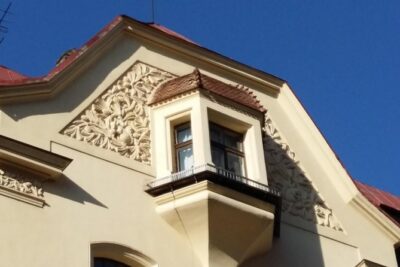 ★ 4.0Riga Art Nouveau walking tourFrom $3627 reviews
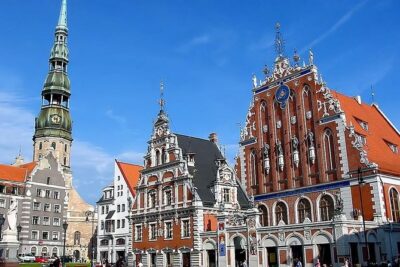 ★ 4.0Old Town And Art Nouveau Walking Tour Of RigaFrom $16815 reviews
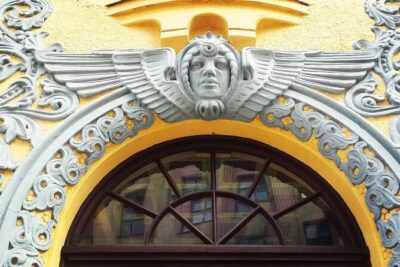 ★ 5.0Private Riga Art Nouveau TourFrom $1785 reviews
 ★ 5.0Ultimate Art Nouveau Experience in Riga – Private TourFrom $1304 reviews
Also on these lists