
REVIEW · RIGA OLD TOWN WALKING TOURS
2 Hours Walking Tour in Legends and Secret of Riga’s Old Town
Riga’s secrets are written on the buildings. This private Old Town walking tour with Lina turns everyday landmarks into stories you can actually picture, and I love the mix of legends plus practical city orientation. Two moments really stuck for me: the Riga Black Balsam tasting at a souvenir shop and the way Lina explains the symbolism behind places like the roosters on churches and guild facades.
One thing to plan for: most stops are outside, and even when you go inside, it’s typically the free areas rather than a full-on guided deep entry into every church. If you’re hoping for long, inside-the-building time at every religious site, this is worth knowing before you book.
In This Review
- Key Things I’d Put on Your Shortlist
- Why This Legends and Secrets Walk Is a Smart First Riga Move
- Price and What You Really Get for $108.43 per Group
- St. Peter’s Church to Town Hall Square: Roosters, 666, and Market Power
- House of the Black Heads and Roland: Freedom, Trade, and Hidden Symbol Work
- Riga City Hall Passage and Rozena iela: Tiny Streets With Big Explanations
- Dome Square and Riga Cathedral: Count the Golden Roosters, Then Know Why
- Stock Exchange Building to Three Brothers: Architecture You Can Read
- From St. Jacob’s to Powder Tower: Bells, Legends, and War Museum Convenience
- Black Magic Bar and the Balsam Story: Chemistry Meets Coffee Break
- Freedom Monument to Laima Clock: Latvia’s Identity in Stone and Chocolate
- Cat House to Guilds to Baltic Way Footprint: Symbols Without a Ticket
- St. John’s Church, Old Fortification Walls, and the Walk Toward the Radio Tower
- A Small Logistics Reality Check (Because Good Tours Need Fit)
- Should You Book This Legends and Secret of Riga Old Town Walking Tour?
- FAQ
- How long is the Riga Old Town walking tour?
- How much does the tour cost?
- Is this tour private?
- What language is the tour offered in?
- Does the tour include pickup?
- Do I need a mobile ticket?
- What’s included in the price?
- Are there admissions or tickets during the tour?
- What should I wear?
- What is the cancellation policy?
Key Things I’d Put on Your Shortlist
- Black Balsam tasting included, plus legends tied to the drink and its inventor
- Lina’s storytelling style, warm, funny, and supported with visual materials
- A symbol-first route, from golden roosters to guild clocks and monument details
- Old Town layering, including underground elements connected to major buildings
- Built for orientation, so you can navigate the rest of Riga on your own
Other walks through Riga Old Town we have rated
Why This Legends and Secrets Walk Is a Smart First Riga Move
This is the kind of tour that helps you stop treating Old Town Riga like a postcard grid. Lina points out what matters, what to notice next time, and how the city’s past still shows up in tiny architectural details.
You’re not just collecting famous names. You’re learning how Riga thinks: through medieval trade power, religious iconography (yes, roosters again), and even the way streets and squares reflect old city rules. It makes your next stroll feel less like wandering and more like reading.
Price and What You Really Get for $108.43 per Group
The price, $108.43 per group up to 6, is set up for small groups, not solo pacing. Since it’s private, you can ask questions and move at the speed that works for you, which is often where value hides with walking tours.
You’ll also get a concrete included experience: alcoholic Black Balsam tasting in the souvenir shop. That’s not just a gimmick. It’s tied to the tour’s theme, alchemy and symbolism, and it gives you something to bring home beyond photos.
One more value point: the route is built around many recognizable Old Town stops, so even if you end up using only part of the tour for your mental map, you still leave with a coherent walk you can repeat on your own.
St. Peter’s Church to Town Hall Square: Roosters, 666, and Market Power
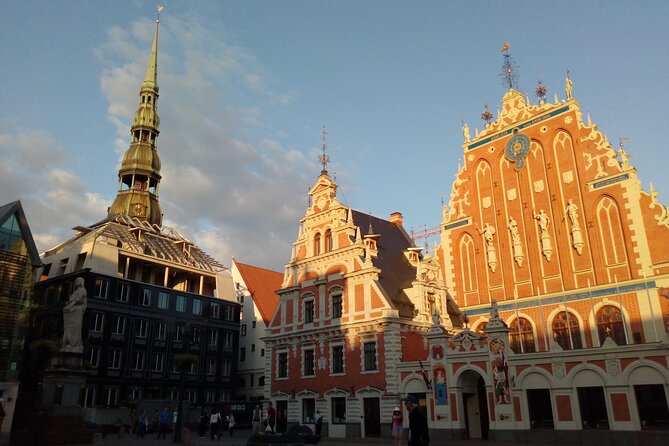
You start near Grand Palace Hotel, and the first stretch sets the tone fast. St. Peter’s Church is one of Riga’s oldest Lutheran churches, and you’ll mostly observe it from outside at first. Lina then brings the story to the golden roosters linked to medieval tradition, including the symbolic meaning in a Christian context.
There’s also a darker twist: she covers how the number 666 affected the church’s fate. Even if you skip the spooky angle, the real win is learning why that rooster imagery shows up again and again around town.
Next, you hit Town Hall Square, Ratslaukums. This was originally a city market, so you’re not only seeing a pretty central square. You’re seeing how Riga functioned: merchants arrived with goods, traded on the same ground that later became the civic core, and the river side view keeps the setting grounded.
In this square, Lina also points you toward modern landmarks you can spot from a distance, including the Latvian National Library and the Museum of the Occupation of Latvia. She also connects local tradition to history, including how the Christmas tree decorating tradition started in the 16th century, and she shows the memory place tied to the first decorated Christmas tree.
More walks around Riga
- Best of Riga Walking Tour – Highlights and Hidden Gems
★ 5.0 · 147 reviews - Riga Art Nouveau walking tour
★ 4.0 · 27 reviews - Best Of Riga Walking Tour: Old Town
★ 4.5 · 19 reviews - Riga walking guided Sightseeing tour
★ 5.0 · 19 reviews - Old Town And Art Nouveau Walking Tour Of Riga
★ 4.0 · 15 reviews
House of the Black Heads and Roland: Freedom, Trade, and Hidden Symbol Work
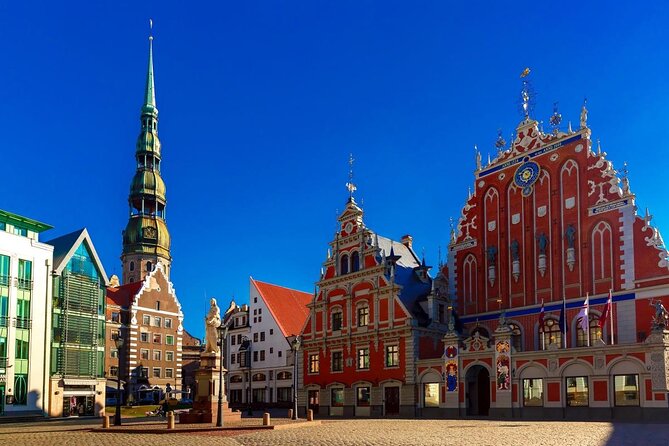
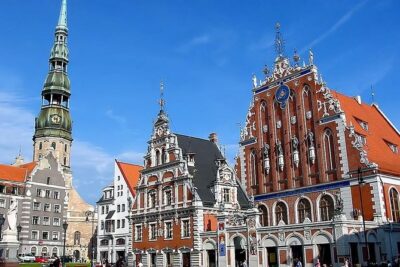
Riga’s Old Town has plenty of ornate facades, but the House of the Black Heads is where you learn to look like a local. You’ll spend time with the building’s decoration, the clock on the facade, and the story of the brotherhood connected to it. Importantly, you’ll visit the free part of the house and see its underground.
That underground element is one of the big reasons this tour feels different from a standard “look, photo, next.” You get a sense of how the city’s layers stack up, physically and historically.
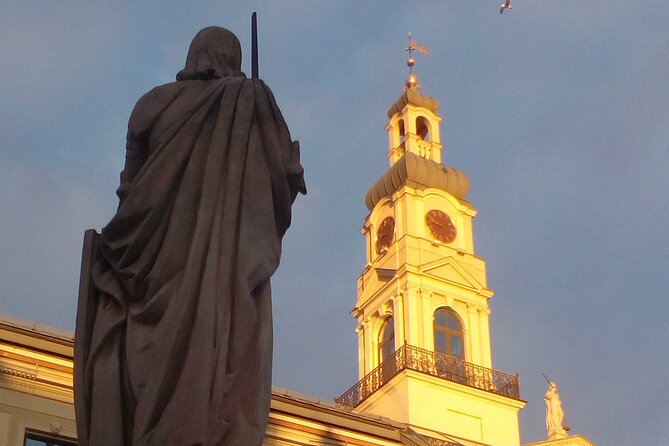
Right after that comes the Statue of Roland, standing in the center of a square. Lina explains him as a symbol of medieval city freedom and also connects him to Riga’s Hanseatic Union ties, with Riga part of the Hanseatic League since 1283. You’ll hear the story behind Roland’s shield and sword, which helps these statues stop being background scenery.
Riga City Hall Passage and Rozena iela: Tiny Streets With Big Explanations
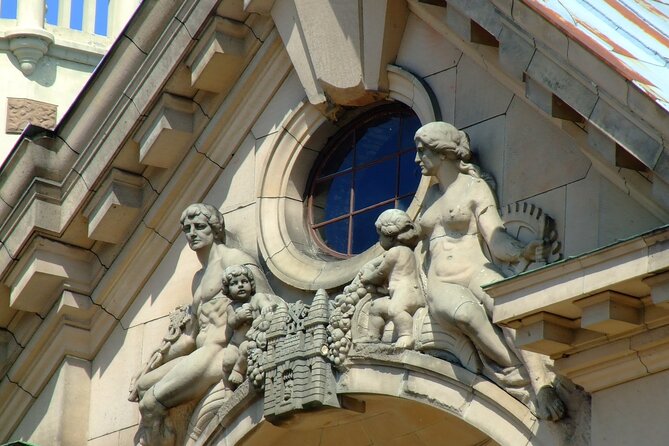
You’ll pass through the City Hall passage on Jaunavu Street, then stop long enough to notice details most people miss when they rush. Lina points out the waterfall River of Time, made for Riga’s 800th anniversary in 2001.
There’s also an unexpected reference here: the Contemporary of Pharaoh Tutunkhamen. It’s the kind of detail that can sound random until you learn why it’s placed where it is.
Rozena iela is next, Riga’s narrowest street. Lina connects it to how narrow lanes earned nicknames in the past, including the idea of streets of the drunk knight. Then she points out the Old City Hall wine cellar from the 13th century, which you’ll see from outside.
Those quick stops matter because they train your eyes. After Rozena iela, you’ll start spotting patterns: where the city compressed movement, where it protected storage and trade, and where it kept everyday life close to power.
Dome Square and Riga Cathedral: Count the Golden Roosters, Then Know Why
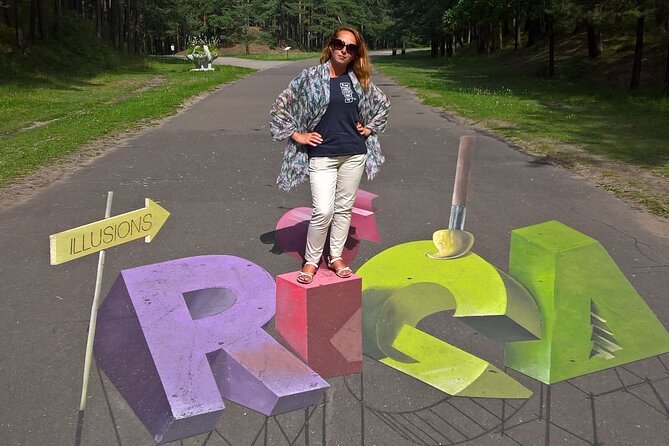
Dome Square is where the tour teaches you a fun, practical skill: counting the golden roosters. Lina walks you through the idea that this large square has a kind of geometry to it, and she also ties it to the annual main Christmas market.
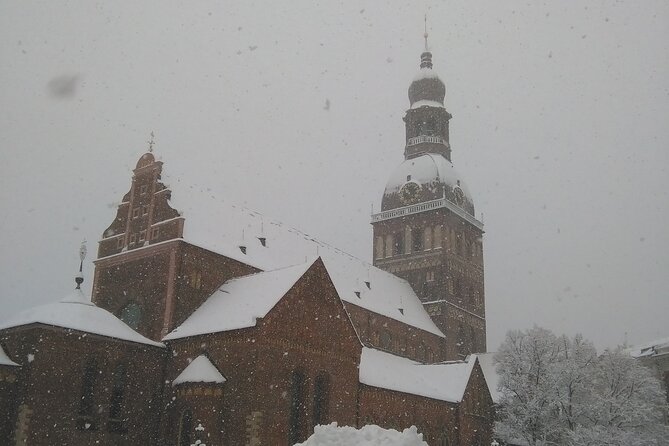
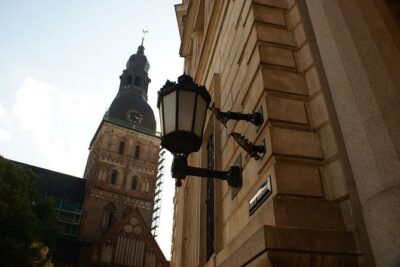
Then you move to Riga Cathedral, where you’ll hear the basics of foundation and construction, plus stories connected to merchant planning. The rooster idea comes back again, including how merchants of Riga used the Dome’s rooster as part of their daily routine.
You’ll visit the free part of the Dome and see a key artwork detail, including the last work of Rafael Santi. You’ll also learn about the pipe organ, once claimed as the biggest in the world in the 19th century, now recognized as one of the best sounding musical instruments. Even if you’re not an organ person, it’s a fascinating way to connect architecture to sound and civic pride.
A small practical note: these religious stops are short, so if you want to sit and linger, you’ll likely do that after the tour, on your own time.
Stock Exchange Building to Three Brothers: Architecture You Can Read
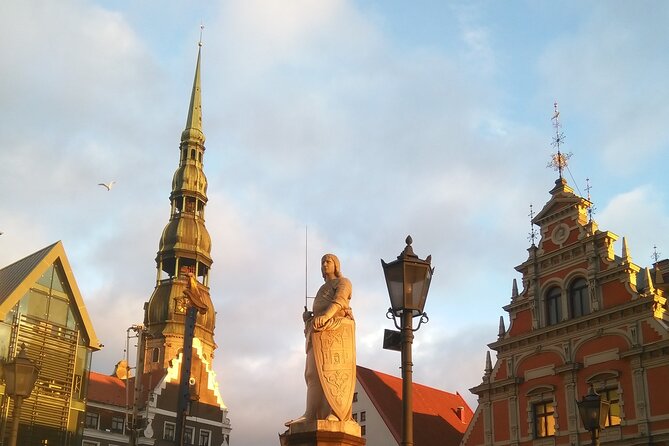
The Riga Stock Exchange Building gets explained with a focus on architecture and movement through the space. Lina describes it, then guides you past one standout detail: the only Venetian gondola in Riga. It’s a Venetian Neo-Renaissance touch from the 19th century, and it now hosts a museum of foreign arts.
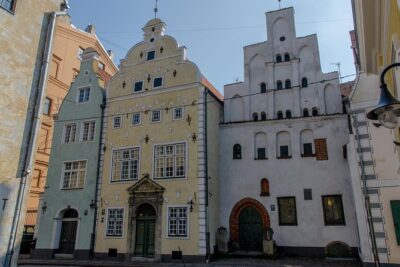
Next comes Three Brothers, Riga’s oldest complex of dwelling houses. Lina explains what each of the houses represents across development of residential construction. You’ll visit the oldest dwelling house, from the 15th century, and you’ll also see the oldest coat-arm of Riga in the inner yard behind the complex.
A fun, useful detail here is the connection to medieval taxes, including the window tax. It’s one of those explanations that makes old building forms stop looking random.
From St. Jacob’s to Powder Tower: Bells, Legends, and War Museum Convenience
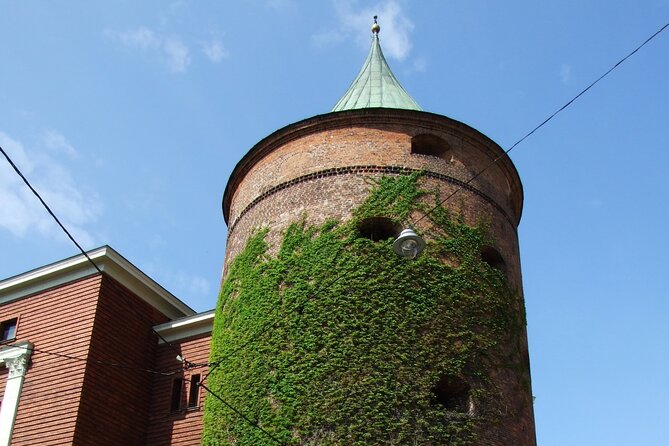
At St. Jacob’s Catholic Cathedral, you’ll view it from outside and hear the story of the bell connected to the poor sinners. Lina explains how the bell was rung when a criminal was brought from prison to Town Hall Square for execution.
Then the tour shifts to Powder Tower, Riga’s biggest and only surviving 14th-century tower. You’ll observe it from the outside, and Lina points out that it now hosts the Latvian War Museum. The good part for planning: the admission to the tower and the museum is listed as free, so you can extend your visit without extra paid entry on that specific stop.
These stops also help you understand Riga’s mix of spiritual and civic life. You see how the city was governed, judged, and defended, not just decorated.
Black Magic Bar and the Balsam Story: Chemistry Meets Coffee Break
If you want the tour to feel playful as well as historical, the Black Magic Bar stop is the one. Lina explains the legend that the bar used to be a pharmacy where Riga Black Balsam was invented in the 18th century.
You’ll have a chance to sample Riga Black Balsams in several forms, plus Lina connects the theme to alchemy and symbolism. She also points out a secret door leading to the laboratory of the alchemist Kunze, inventor of Black Balsam. It’s the tour’s most storybook moment, but the tastings keep it grounded.
Practical tip: if you’re sensitive to alcohol flavors, take small sips. You’re still walking after this.
Freedom Monument to Laima Clock: Latvia’s Identity in Stone and Chocolate
The Freedom Monument stop is built for understanding why it matters to Latvian people. Lina explains the monument’s importance and the hidden symbolism behind it, including the fact it was built during the first Latvian Republic.
After that, you reach Laima Clock, Riga’s main meeting point. Lina explains Laima as Latvia’s biggest chocolate producer, and that simple idea makes the landmark feel less like clutter and more like lived-in city logic.
Then you get a few “short street” moments that work best when you walk them slowly. Ķēniņu iela is Riga’s shortest street, and Lina explains why it became so short. It’s brief, but it’s exactly the kind of detail that makes the city memorable later.
Cat House to Guilds to Baltic Way Footprint: Symbols Without a Ticket
You’ll spot the Cat House, linked to Riga’s cat symbolism and a legend about the black cat. Next, you move to Livu Square, where Lina explains the square’s hidden symbolism and points out the monument called Liv’s head.
Then you hit the craft and merchant identity of Old Town through guild buildings. Lina explains the Small Guild and its neo-Gothic style, with construction in the years 1864 to 1866. After that, you visit the Great Guild story, tied to Riga’s merchant guild tradition, and the Hanseatic League background, including the German merchant guild period from 1354 to 1936.
Finally, you reach the Baltic Way footprint monument, a small red granite reminder of the 1989 human chain linking Tallinn to Vilnius via Riga. It’s near the crossroads of Kaļķu and Vaļņu, close to McDonald’s. Lina frames it as modern history embedded in public space, so you’re not only looking at medieval trade and churches.
St. John’s Church, Old Fortification Walls, and the Walk Toward the Radio Tower
This stretch gives you another side of Riga: religious punishment stories, surviving medieval city defenses, and the Soviet era landmark at the edge of the walk.
At St. John’s Church, Lina shares the story of two Dominican monks said to have been walled up alive into a church wall, and she shows where they were found during reconstruction works in the 19th century. She also points out the oldest Riga gate leading to the Dominican monastery.
Then you move to Vecriga, a section of the Old fortification wall from the 13th century. Lina explains it was built by Germans during the Livonian Order’s time to protect Riga from invaders.
Next, you walk Kalēju iela, the longest street of Old Town. Lina explains that it used to be an embankment of the Riga River, and she connects the street’s name to blacksmith work. It’s a practical reminder that street names in Riga often point to what people did there.
To finish, you’ll see the Riga Radio and TV Tower, noted as the tallest tower in the European Union. Lina explains its construction between 1979 and 1989 with Soviet central government funding, and its height reaching 368.5 meters. Even though it’s not “Old Town,” it closes the historical timeline in a way that feels intentional.
She also brings you back to a Riga-identity detail with the first Christmas tree marker, a memory plaque dedicated to the first decorated Christmas tree in 1510. Lina ties it to the idea that Riga is the town of four capitals.
A Small Logistics Reality Check (Because Good Tours Need Fit)
This tour is private, up to 6 people, and offered in English. It lasts about 2 hours 30 minutes, and it’s listed with pickup offered.
The biggest practical question is how you like to pace your day. If you enjoy structured walking with lots of stops to notice and ask, this is a strong match. If you want lots of time to wander on your own between major sights, you might find the pace a bit stop-and-go, even though it’s generally described as low-key and not rushed.
Should You Book This Legends and Secret of Riga Old Town Walking Tour?
Yes, if you want a first-pass Riga Old Town experience that teaches you how to look. I’d book it if you’re the type who loves symbolism, legends tied to real buildings, and a route that makes your next day in Riga easier.
I’d think twice if your main goal is to spend long stretches inside churches and museums. Many stops are outside, and even inside moments are often the free areas rather than full deep entries at every site.
If you’re short on time, the private setup plus Lina’s storytelling, including the Black Balsam tasting and the way she connects details like roosters and guild clocks to the city’s bigger story, makes this one of the better-value ways to get your bearings fast.
FAQ
How long is the Riga Old Town walking tour?
It runs about 2 hours 30 minutes.
How much does the tour cost?
The price is $108.43 per group (up to 6 people).
Is this tour private?
Yes. It’s a private tour/activity, so only your group participates.
What language is the tour offered in?
It’s offered in English.
Does the tour include pickup?
Pickup is offered. The listed pickup detail is St. Peter Church in Riga, Reformacijas laukums. The main start meeting point is Grand Palace Hotel, Pils Street 12, Riga 1050 Latvia.
Do I need a mobile ticket?
Yes. A mobile ticket is included.
What’s included in the price?
The tour includes an alcoholic beverage degustation of Riga Black Balsam in a souvenir shop.
Are there admissions or tickets during the tour?
Some stops specify admission tickets included or free parts of sites. The tour notes also list that all fees and taxes are not included, so it’s best to expect a mix of outside viewing, free-area visits, and select included admissions.
What should I wear?
Wear comfortable shoes.
What is the cancellation policy?
You can cancel for a full refund up to 24 hours in advance of the experience start time.
Other Latvian Tours
- Riga Old Town walking tour★ 4.5 · 304 reviews
- Latvian food tasting tour at Riga Central market★ 4.5 · 241 reviews
- Discover Riga Bike Tour★ 5.0 · 166 reviews
- Best of Riga Walking Tour – Highlights and Hidden Gems★ 5.0 · 147 reviews
- Riga Old Town Walking Tour in a Small Group★ 4.5 · 132 reviews
More Latvia Reviews
- Riga Old Town walking tour★ 4.5 · 304 reviews
- Latvian food tasting tour at Riga Central market★ 4.5 · 241 reviews
- 2 countries! Hill of Crosses, Rundale Palace and Bauska castle★ 5.0 · 225 reviews
- Discover Riga Bike Tour★ 5.0 · 166 reviews
- From Riga: Hill of Crosses & Jelgava Highlights★ 5.0 · 149 reviews
Riga Old Town, On Foot Again
- Riga Old Town walking tour★ 4.5 · 304 reviews
- Riga Old Town Walking Tour in a Small Group★ 4.5 · 132 reviews
- Private Riga Old Town Walking Tour★ 5.0 · 62 reviews
- Old Town Walking Tour of Riga★ 4.5 · 28 reviews
- Best Of Riga Walking Tour: Old Town★ 4.5 · 19 reviews
Other Latvian tours we have written up


Riga Old Town Walking Tours, side by side.
 ★ 4.5Riga Old Town walking tourFrom $18304 reviews
 ★ 4.5Riga Old Town Walking Tour in a Small GroupFrom $22132 reviews
 ★ 5.0Private Riga Old Town Walking TourFrom $18162 reviews
 ★ 4.5Old Town Walking Tour of RigaFrom $15428 reviews
 ★ 4.5Best Of Riga Walking Tour: Old TownFrom $2419 reviews
 ★ 4.0Old Town And Art Nouveau Walking Tour Of RigaFrom $16815 reviews
 ★ 5.01H Private Photoshoot in Old Town of RigaFrom $1398 reviews
 ★ 5.0Old Riga Walking Tour / Riga Altstadt SpaziergangFrom $1207 reviews
Also on these lists